Why Road Salt & Liquid Brine Destroy Ontario Clear Coats (And How to Neutralize Them)
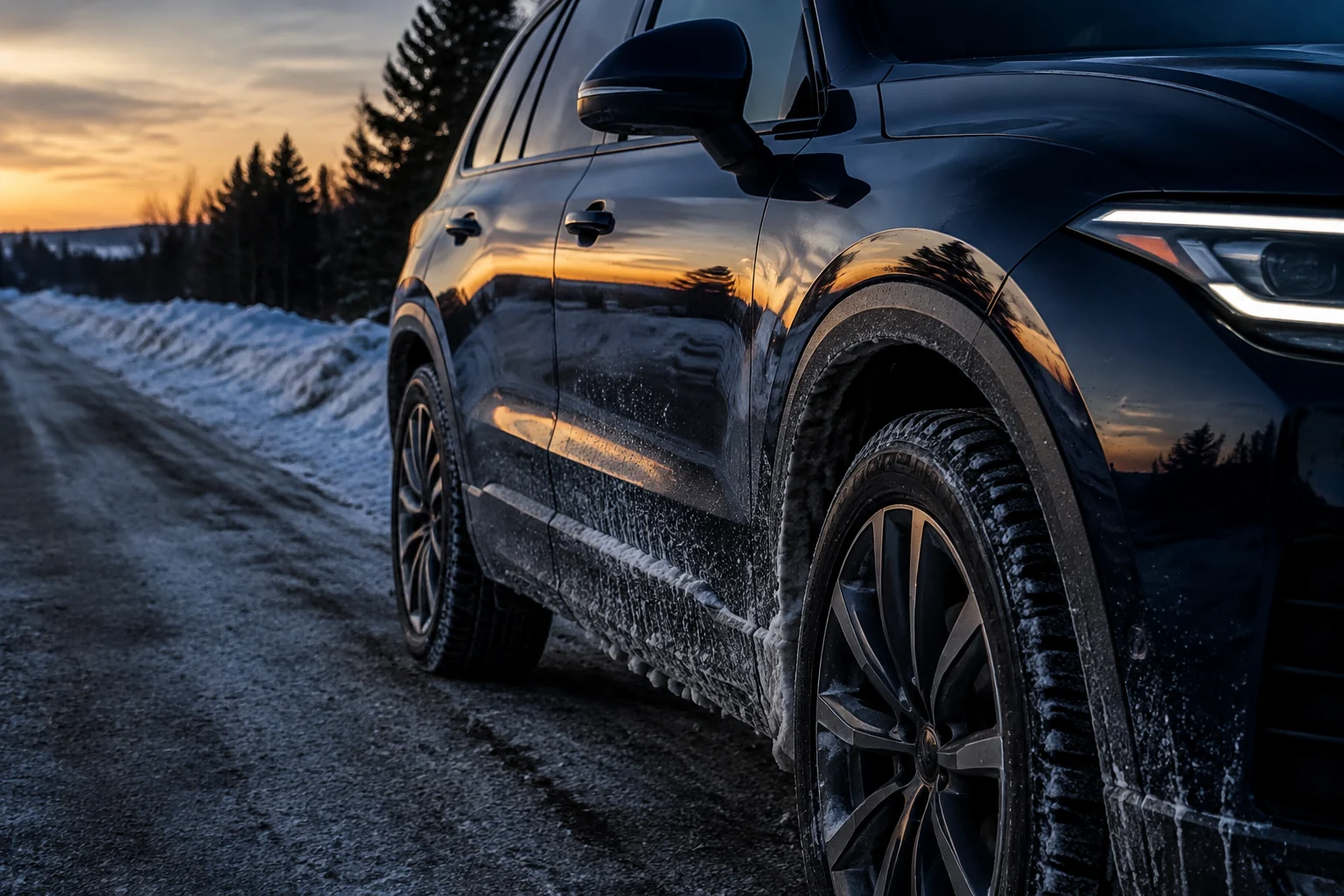
Every winter across Simcoe County, Highway 400 and local roads in Barrie and Innisfil are blanketed with thousands of tonnes of road salt and liquid chemical de-icers. While these treatments keep the roads drivable, they wage an unrelenting chemical assault on your vehicle’s exterior.
At Refined Appearance Auto Care, the most common winter damage we inspect isn’t rock chips—it’s chemical clear coat pitting, oxidation, and underbody corrosion caused by neglected road brine.
Many drivers assume that running through a quick automated wash every week is enough to keep their vehicle safe. Unfortunately, traditional washes often leave the most destructive chemical residues behind.
Here is what is really happening to your vehicle’s clear coat during an Ontario winter, and the exact process required to neutralize it.
Rock Salt vs. Liquid Brine: The New Winter Threat
Municipalities across Ontario have shifted heavily toward liquid brine (calcium chloride and magnesium chloride) as an anti-icing agent before snowstorms. While traditional rock salt bounces off roads, liquid brine clings to the asphalt—and directly to your vehicle.
From a detailing perspective, liquid brine is significantly more aggressive than dry rock salt:
- Higher Wet Adhesion: Brine forms an oily, chalky film that atomizes into a mist at highway speeds, penetrating wheel wells, rocker panels, door jambs, and engine bays.
- Hygroscopic Nature: Magnesium chloride actively pulls moisture out of the air even when temperatures rise above freezing, keeping the corrosive chemical reaction active on your paint.
- Porous Clear Coat Penetration: Automotive clear coat is not completely impermeable glass; it expands and contracts with temperature shifts. Microscopic cracks and pores in neglected paint trap chemical salts beneath the surface.
Left unchecked, this chemical interaction can trigger osmotic blistering—where trapped salt draws moisture through micro-fissures in the clear coat and begins lifting the finish from the layers beneath.
Why Touchless Washes Won’t Neutralize Road Salt
Automated touchless car washes are a convenient stopgap during freezing weather, but they have two critical limitations:
1. Recycled Water and Salinity
Most commercial tunnel washes recycle their runoff. While filtration systems remove heavy grit and sediment, they cannot economically strip dissolved salts. You may inadvertently rinse your vehicle with slightly brackish, salt-laden water.
2. Harsh Alkaline Detergents
To strip road grime without physical contact, touchless washes rely on heavy, high-pH caustic detergents (often pH 11 or higher). These detergents strip away traditional waxes and sealants within a couple of passes, leaving your bare clear coat exposed to the next round of road brine.
The Professional Decontamination Process
Safely removing bonded winter brine requires neutralizing the chemical bond rather than scrubbing grit into the paint. When we perform a winter decontamination at our Utopia studio—or on-site when a suitable heated indoor workspace is available—we follow a strict multi-step chemistry protocol:
Step 1: Pre-Foam Neutralization
Before a mitt touches the paint, we apply a high-lubricity, low-pH pre-wash foam. This softens the road film and helps neutralize alkaline road salts without mechanical friction.
Step 2: High-Pressure Temperature-Controlled Rinse
Using warm 40°C heated pressure water, we flush rocker panels, wheel arches, brake assemblies, and undercarriage channels where salt accumulates and crystallizes.
Step 3: Chemical Iron & Salt Decontamination
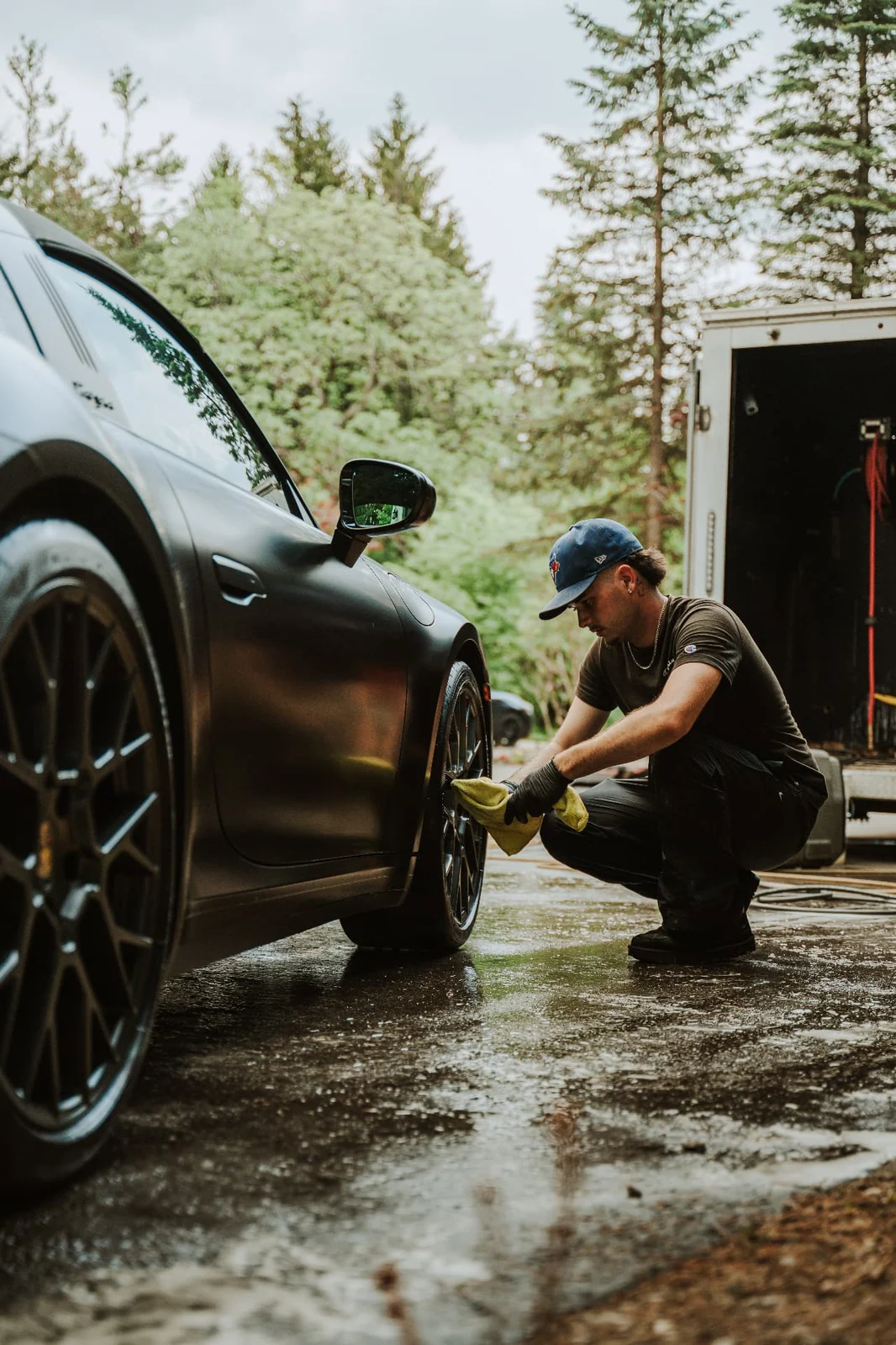
Road brine binds with metallic brake dust and industrial fallout. A dedicated iron remover breaks down embedded sintered metal particles, preventing localized rust spots (rail dust) on white and light-coloured paint.
Step 4: Two-Bucket Contact Wash with Grit Guards
Using ultra-dense microfibre wash pads and pH-neutral lubricating shampoos, each panel is gently cleaned with straight-line strokes, rinsing the pad after every section to help prevent swirl marks.
Long-Term Defense: Why Ceramic Coating Changes the Game
Traditional waxes and store-bought polymer sealants break down rapidly under Ontario road salts and freeze-thaw cycles.
A professionally applied nanoceramic coating creates a durable, bonded silicon dioxide (SiO₂) barrier over your clear coat:
- Strong Chemical Resistance: Quality ceramic coatings resist corrosive road brine and routine wash chemistry far better than conventional waxes, adding a sacrificial layer over your clear coat.
- Extreme Hydrophobic Surface: Water and slush bead up tightly and roll off at driving speeds, carrying surface grime away instead of letting salty film cling as easily.
- Lower Surface Energy: Winter road film releases far more cleanly during regular maintenance washes without needing harsh caustic detergents.
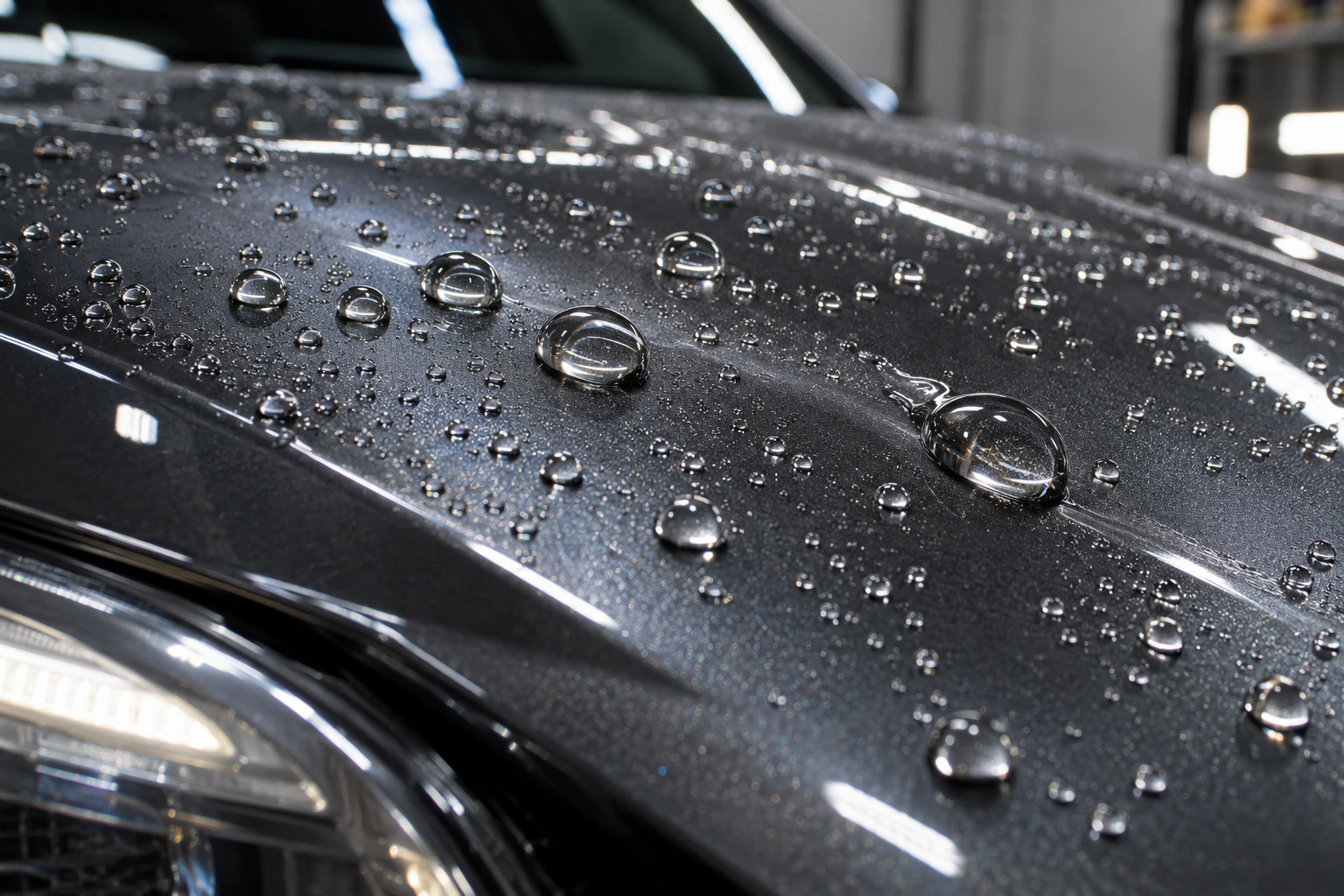
Keep in mind that ceramic coating is not rustproofing and does not replace regular washing—winter salt still needs to be rinsed away consistently—but it makes every winter cleanup faster and safer for your paint.
Protect Your Investment This Winter
Winter weather is unavoidable in Simcoe County, but clear coat corrosion doesn’t have to be. Consistent maintenance washes and durable surface protection ensure your vehicle retains its gloss and resale value year-round.
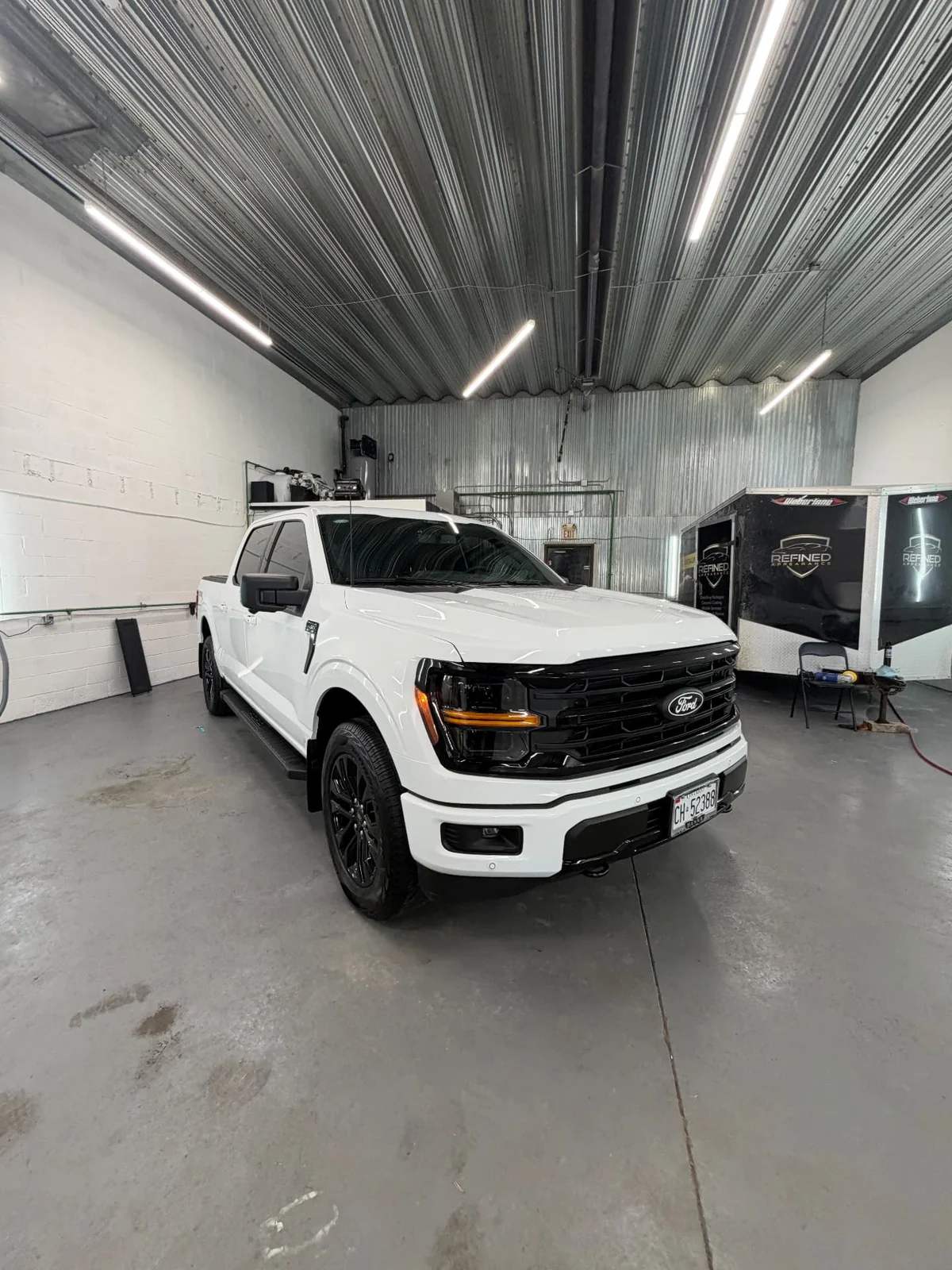
Explore our detailing packages, mobile detailing services, and ceramic coating protection, or request your winter appointment online with Refined Appearance Auto Care.
Care for your vehicle, close to home.
Explore detailing packages, ceramic coating and paint correction at our Utopia studio, serving Barrie and Simcoe County.
Back to the detail journal